A National Voice-Clone Ad Needs More Than One Consent Form
A 30-second synthetic-voice spot can cross state publicity laws, call-consent rules and contract limits. The workable answer is a distribution matrix tied to the recording, render and channel.
October 13, 2026 · 8 min read
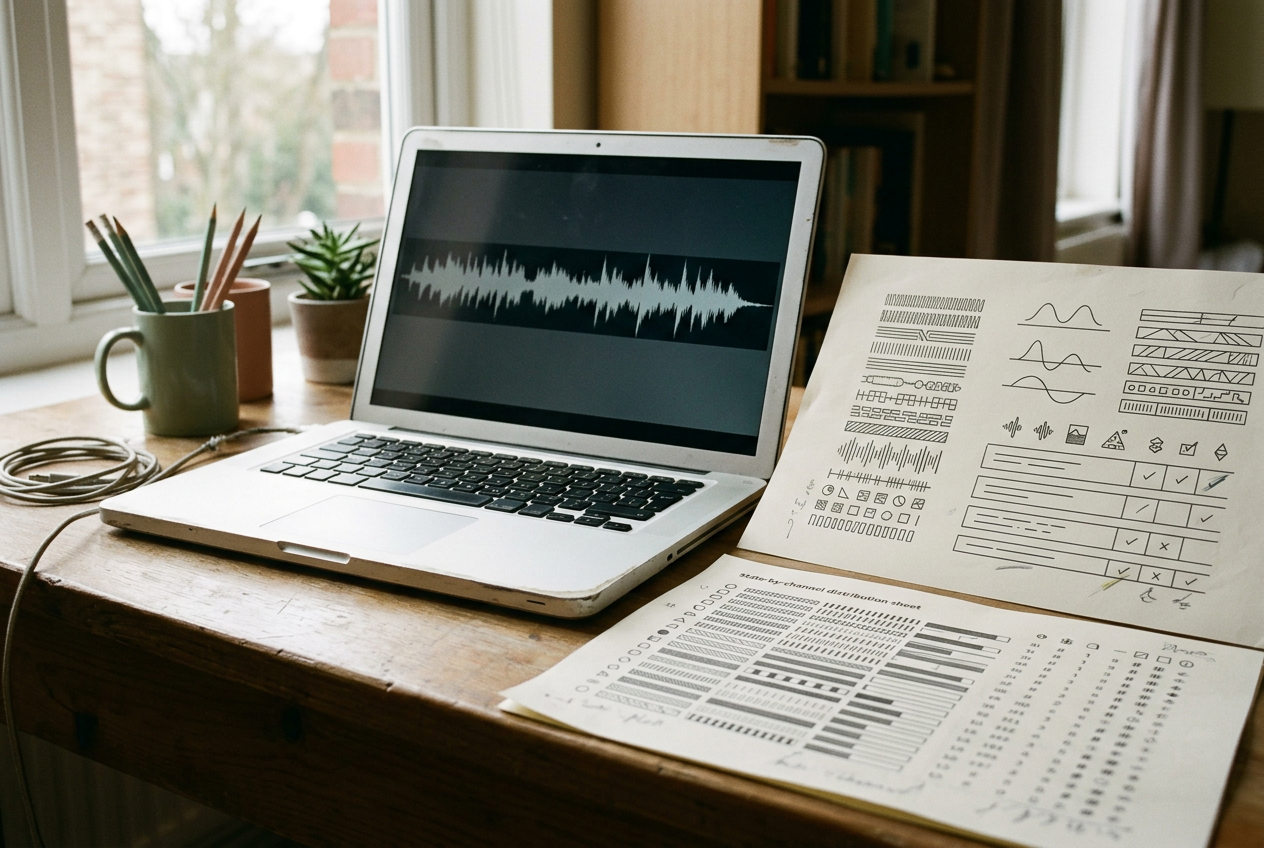
Take one ordinary production job: a publisher hires a recognizable host to record clean speech samples, uses a voice-cloning service to generate a 30-second sponsor message, then places the same audio in a podcast, a streaming ad and an outbound call campaign. The words never change. The legal and operational posture does.
That is the problem with treating voice consent as a checkbox inside the recording release. A voice clone can implicate state publicity rights, meaning a person’s control over commercial use of their identity, as well as contract law, consumer-protection rules and channel-specific calling requirements. Some obligations attach where the speaker lives. Others turn on where an audience member receives the message, what the message sells or whether a machine placed the call.
There is no general US rule requiring every synthetic voice advertisement to carry the same label. There is also no single consent form that overrides state statutes, union agreements, platform policies and federal calling rules. Congressional proposals for a federal digital-replica right have attracted attention, but proposals are not the operating baseline.
The useful artifact is a distribution matrix attached to the 30-second spot. Each row records a state and channel; each column identifies the permission relied upon, disclosure text, audience restrictions, contract limits and evidence retained. Without that matrix, the team cannot tell whether “approved” means approved to generate the file, approved to publish it, or approved to call thousands of phones with it.
Permission must describe the generated use
The first checkpoint comes before model training. The host should know that the recording will seed a system capable of generating speech the host never said, rather than merely being edited into a finished commercial.
That distinction matters under several state publicity laws. New York Civil Rights Law Sections 50 and 51 address use of a living person’s “name, portrait, picture, likeness or voice” for “advertising purposes or for the purposes of trade” without written consent. California Civil Code Section 3344 likewise addresses knowing commercial use of another person’s voice and other identity attributes without prior consent. Illinois defines identity broadly enough to include voice and regulates commercial use under its Right of Publicity Act.
Tennessee’s Ensuring Likeness Voice and Image Security Act, known as the ELVIS Act, took effect in July 2024 and expressly strengthened protection for voice. Its definition reaches a sound that is “readily identifiable and attributable to a particular individual,” whether the voice is real or simulated. The law addresses unauthorized commercial exploitation and also creates potential exposure around tools whose primary purpose is producing a particular person’s voice without authorization, subject to statutory exceptions.
These laws do not produce one uniform drafting rule. They do make a vague release risky to operationalize. Permission to “record and edit” a performance does not plainly answer whether a model may generate new lines, whether the advertiser may change the product named in those lines, or whether the clone may remain available after the host leaves the publisher.
For the 30-second spot, the approval record should identify the voice model or vendor, the script or bounded category of scripts, permitted media, territory, duration and parties allowed to generate new audio. It should also settle whether the host reviews every render or approves a defined workflow, and what happens to stored voice embeddings, which are compact numerical representations of vocal characteristics, when the license ends.
California adds a contract-specific constraint. AB 2602, enacted in 2024, limits enforceability of certain provisions that allow a digital replica to replace work an individual would otherwise perform when the provision lacks a reasonably specific description and the individual lacked specified professional representation. This is narrower than a universal ban on voice cloning, but it undercuts the idea that a broad, perpetual sentence hidden in a services agreement is always enough.
Union-covered work brings another layer. SAG-AFTRA agreements can require consent and compensation practices for digital replicas apart from state law. A production team needs to classify the engagement before recording, not after the media plan is booked.
The audio file and the phone call are different releases
Once the approved script becomes audio, distribution determines the next rule set. Posting the sponsor message in a podcast feed is a commercial identity use. Playing it through an automated outbound call also invokes federal telephone law, even if the host authorized the cloned voice.
In 2024, the Federal Communications Commission confirmed that AI-generated voices fall within the Telephone Consumer Protection Act’s restrictions on calls using an “artificial or prerecorded voice.” That classification matters because covered calls require prior express consent unless an exemption applies, while telemarketing calls generally face the stricter prior express written consent standard. Required identification and opt-out mechanisms can apply as well.
The host’s permission and the recipient’s consent answer different questions. One authorizes use of the identity. The other governs whether the advertiser may deliver an artificial-voice call to that number. A rights-management system that stores only the talent release cannot establish TCPA consent, and a dialing platform’s consent record says nothing about whether the publisher licensed the cloned performance.
The FCC has also considered additional AI-specific disclosure requirements for calls. A proposal should not be configured as if it were already an enforceable nationwide rule. Teams should record the current requirement and proposed change in separate fields, with an owner assigned to update the call script if the proposal becomes binding.
State calling laws may impose further restrictions. The practical response is not to ask the speech model to choose legal language at generation time. Build channel-specific masters instead: one approved podcast file, one streaming-ad file and one calling version containing the identification and opt-out language required for that deployment. Generating disclosure text dynamically creates another unreviewed performance and makes the final output harder to reproduce.
Disclosure does not cure missing authorization
A label such as “AI-generated voice” can help listeners understand what they are hearing. It does not retroactively authorize the use of someone’s identity, satisfy a calling-consent requirement or convert a deceptive endorsement into an acceptable one.
Federal Trade Commission rules and guidance remain relevant when a synthetic voice falsely suggests that a person endorses a product or when an advertisement misleads consumers about who is speaking. The FTC’s government and business impersonation rule is enforceable; broader protections specifically addressing impersonation of individuals have also been discussed through proposed rulemaking. Those categories should not be collapsed in a compliance ticket.
Election communications are even less suitable for a generic national setting. States have adopted different rules for materially deceptive or AI-generated political media, often with definitions, timing windows and disclaimer language that do not match. Some measures have also faced constitutional challenges. A brand advertisement and an election advertisement using the same cloned host therefore need separate review paths, not one “synthetic media” toggle.
For the publisher’s sponsor spot, a voluntary spoken disclosure may still be worthwhile, especially where the clone could reasonably be mistaken for a fresh human recording. It costs airtime and can make short audio awkward. A visual label cannot do the work in an audio-only feed, while a disclosure buried in episode notes may arrive after the listener has formed the wrong impression.
The receipt should follow the render
The production record needs to survive personnel changes and vendor migrations. Keep the signed authorization, source-session consent, approved script, generated file and distribution matrix together. Record the model or service used, who initiated generation, who reviewed the output, where the file was sent and when any revocation or expiration took effect.
A cryptographic hash, a short value derived from a file that changes when the file changes, can link the approval to the exact audio master. It does not prove that the underlying consent was valid. It does prevent a later edit from quietly inheriting an approval issued for a different render.
Quality review belongs in the same gate. Voice models can mispronounce product names, flatten required qualifiers or produce an emotional delivery the speaker did not approve. The fallback is mundane: revise the script, regenerate the line and route the new file through human approval. If the model cannot deliver a legally required disclosure intelligibly, use the original speaker or a conventional voice actor.
The clone is not worth preserving at the expense of a clear notice.
Return to the 30-second spot. Before the podcast upload, the publisher can point to the host’s synthetic-use authorization and the hash of the approved master. Before the streaming buy, it can confirm that the territory and term fit the contract. Before the outbound call, it can pair a calling-specific file with recipient consent records, identification language and opt-out handling.
That setup costs more time than exporting one file to every channel. It also exposes the decisions that a universal consent checkbox hides.
Questions people ask
Does a person’s consent make any use of their cloned voice legal?
No. Consent should cover the particular generated use, but distribution may trigger separate advertising, consumer-protection, calling or election rules. Contract limits also matter: permission for one sponsor message may not authorize new products, indefinite model retention or automated calls.
Must every
AI-generated voice ad disclose that it is synthetic?
There is no single nationwide disclosure rule covering every synthetic voice advertisement. Requirements depend on the state, content and delivery channel, while deception law may apply even without a voice-specific label. A voluntary disclosure can reduce confusion, but it does not replace authorization.
Can one national audio file be used for podcasts and robocalls?
The recording may be technically identical, but the compliance records are not. An automated call using an AI-generated voice falls within federal artificial or prerecorded voice rules, so the caller may need recipient consent, identification and an opt-out process that a podcast placement does not require.
What should a publisher retain after releasing the ad?
Keep the talent authorization, recording-session consent, approved script, exact audio master, file hash, generation log and channel-by-state distribution decision. The record should show who approved the render and when rights expire, so an old file cannot remain in circulation after its permission ends.
One story a day
The story of the day, in your inbox
One real story about AI each morning — no hype, no alarm, just company for the road.