Your Phone Can Flag a Cloned-Voice Scam, Not Prove One
A phone can notice the script around a cloned family voice, but it may not identify the voice as synthetic. The decisive check still happens after you hang up.
September 28, 2026 · 7 min read
The useful warning appeared on a Pixel phone only after the staged caller moved from an urgent family problem to instructions for sending money. The synthetic voice itself was not the decisive signal.
That distinction matters. Phone makers and carriers increasingly describe their call protection in AI terms, which can leave the impression that a handset is listening for the acoustic fingerprints of a voice clone. In practice, the stronger consumer tools combine caller reputation, call behavior and conversational context. They are better at recognizing a familiar scam script than authenticating a family member.
For a controlled check, I used a compatible Pixel with Scam Detection enabled and a synthetic version of my own voice, generated from a recording I had consented to use. A second phone placed the calls. This was a small functional evaluation, not a benchmark, and it cannot establish a detection rate across accents, carriers, devices or voice-generation systems.
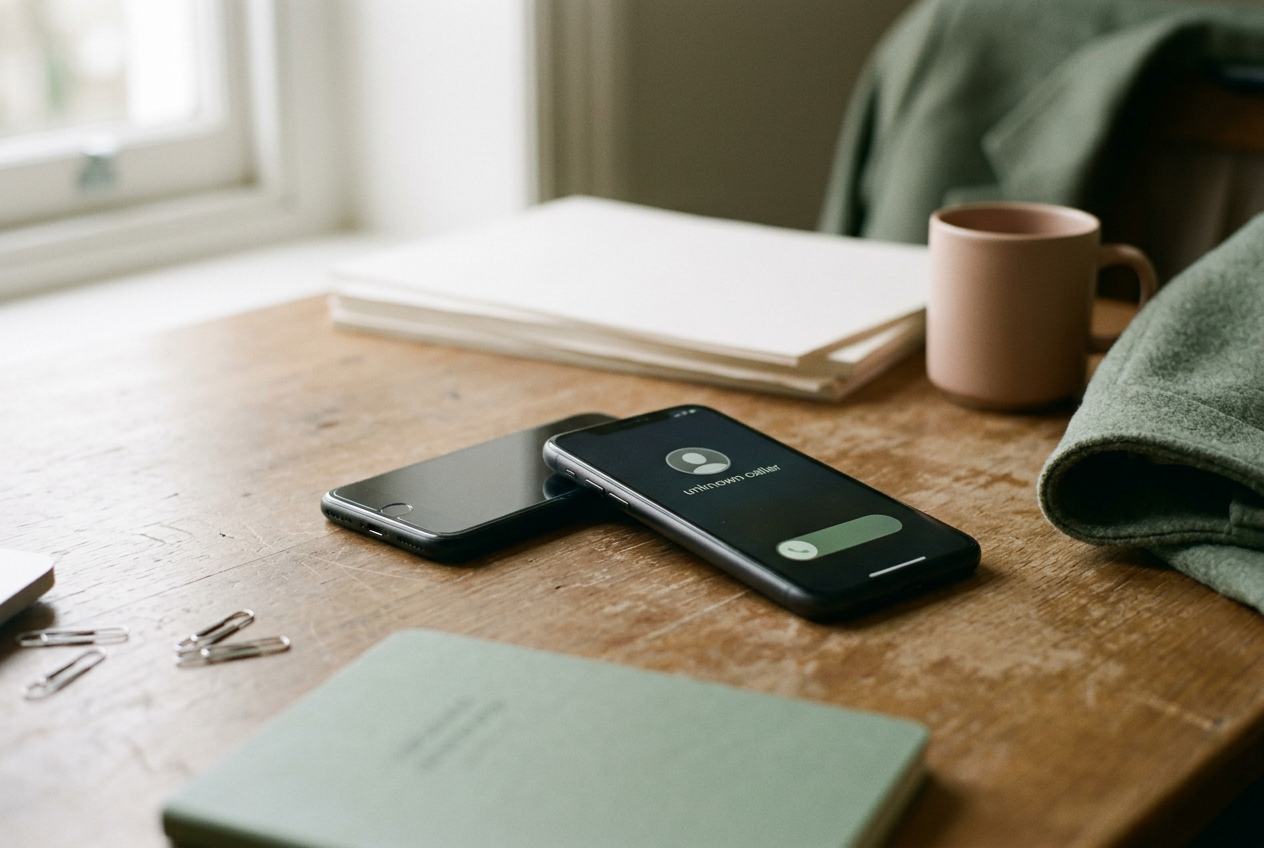
I returned throughout the test to one ordinary setup: the Pixel lying face up on a desk, an incoming number not saved in contacts, and a caller claiming that a relative needed money immediately. That is close to the decision a real person faces. The screen can show a warning, but the voice in the earpiece still sounds like the evidence.
The phone is mostly judging the conversation
Google’s Scam Detection on compatible Pixel phones analyzes a live call for patterns associated with fraud. The analysis runs on the device, meaning the phone processes the conversation locally rather than sending the call audio to a remote server for that task. Availability depends on the phone, language and region.
The feature is not presented as a general-purpose voice-clone detector. It listens for contextual signals such as unusual payment demands, requests for sensitive information and pressure to act before checking with anyone else. If the system finds a suspicious pattern, it can alert the person receiving the call during the conversation.
That design produced the most important observation in the desk test. A synthetic voice delivering neutral family conversation did not become suspicious merely because it was synthetic. Once the staged script introduced an emergency and directed the recipient toward an unusual payment, the conversation gave the phone much more to work with.
A natural, uncloned voice can trigger the same kind of warning if it follows a known fraud pattern. Conversely, a convincing clone that says little beyond “I need help” may provide too little context, especially if the recipient reacts quickly and supplies the scammer with the rest of the story.
This is the first constraint to remember: the warning may arrive late relative to the emotional effect. The phone needs enough speech to infer intent, while a caller pretending to be a child or parent can create panic in one sentence. Local processing avoids a network round trip and limits exposure of the audio, but it cannot remove the time needed to hear the scam develop.
A carrier label answers a different question
Before the call reaches the Pixel’s conversation analysis, the carrier may already have attached a label such as “Spam Risk.” That judgment usually draws on calling patterns, complaint history and information about how the call entered the telephone network. It does not mean the carrier compared the speaker with a recording of your relative.
STIR/SHAKEN, a caller-ID authentication framework, can help carriers assess whether a provider has verified the caller’s authority to use a number. It does not certify that the person speaking is honest. A scammer can use a legitimately obtained number, compromise an account or persuade a victim from a number that has not yet accumulated a bad reputation.
The reverse problem also appears. A real family member calling from a hospital desk, borrowed phone or new number may look unfamiliar even though the emergency is genuine. Blocking every unknown caller would reduce some exposure, but it would also discard calls people may need to receive.
Carrier screening therefore helps at the entrance. On-device analysis can help once the conversation starts. Neither layer answers the identity question that matters most in a cloned-family call: whether this speaker is the person they claim to be.
The voice is weak evidence on a telephone line
Voice cloning has improved enough that a short sample can produce recognizable speech, although quality varies widely. Telephone audio makes direct detection harder. Calls discard part of the original frequency range, add compression and may include packet loss or background noise, all of which can remove or imitate artifacts that a synthetic-audio classifier might use.
A classifier is a model that assigns an input to a category, such as likely real or likely synthetic. Its score depends on the examples used to train it, and a detector that recognizes artifacts from one generation method may struggle with another. Replaying a clone through a speaker into a phone adds another layer of distortion.
Even a dedicated synthetic-speech score would not be proof. False positives could cast suspicion on a real caller with a poor connection, a speech impairment or an assistive voice. False negatives would be equally dangerous if the interface encouraged the recipient to treat an unflagged call as authenticated.
The practical design choice is conservative: warn about behavior that resembles a scam without claiming to know who produced the audio. That makes the feature less satisfying than a green “real voice” badge, but such a badge would promise more certainty than the phone has earned.
Screening helps most before the conversation starts
Call screening can reduce the emotional advantage of the clone. On supported phones, an automated screening feature can ask an unknown caller to state a name and reason for calling, then show a transcription before the recipient answers. A transcription converts speech into text, which strips away some of the persuasive familiarity of a cloned voice.
This is not the same as detecting synthetic audio. It changes the workflow. Instead of hearing a panicked imitation immediately, the recipient first sees an unknown number and a written explanation that can be judged more coolly.
The tradeoff is friction. Legitimate callers may hang up when an automated system answers, transcriptions can mishandle names, and urgent calls from unfamiliar numbers do happen. Screening every call is more defensible for someone who receives frequent spam than for a person whose work depends on answering new contacts.
On-device analysis also has a privacy advantage over sending complete call audio to a cloud service, though users still need to inspect the settings and product description for their device. Call recording, carrier filtering, voicemail transcription and scam analysis are separate functions with different data paths. Turning on one does not explain what the others retain.
Back at the desk, the most useful screen was not one claiming that my synthetic voice had been exposed. It was the interruption that challenged the payment script while there was still time to stop. That is a narrower capability, and a useful one.
Verification must leave the suspicious call
The reliable check begins by ending the call. Do not use a callback number supplied by the caller, and do not let the caller keep talking while another person supposedly confirms the story. That preserves the scammer’s control of the channel.
Call the relative through a number already stored in your contacts, or reach another trusted person who should know where they are. A message sent through an existing family thread can work when the relative cannot answer, though a compromised messaging account remains possible. For a claimed emergency involving an institution, find its public number independently rather than accepting contact details dictated during the call.
A family verification phrase can shorten this step, provided it was agreed in advance and is not based on information visible in social posts. It should function as a prompt to stop and verify, not as a permanent password shared widely across the family. If the phrase is exposed, replace it.
The phone warning still has value. It creates a pause at the moment urgency starts pushing the recipient toward payment or disclosure. Treat that pause as a direction to change channels, not as a verdict about the audio.
The setting worth checking now
On a compatible Pixel, look in the Phone app’s settings for Scam Detection and review whether it is available and enabled. Also inspect Call Screen and the carrier’s spam-protection controls, because these layers act at different stages and one setting does not substitute for another.
People using other Android phones or iPhones may have carrier labeling, unknown-caller filtering, live voicemail transcription or third-party screening instead of equivalent live conversation analysis. The useful test is concrete: determine whether the feature evaluates the conversation, screens the caller before pickup or only labels the number from reputation data.
Then set one household rule. An unexpected request for money, credentials or secrecy ends the call, even when the voice sounds right. The verification call goes to the saved contact on the Pixel, not to a number spoken by the caller.
Questions people ask
Can a phone tell that a family member’s voice was cloned?
Not reliably from ordinary call audio. Some systems may analyze synthetic-speech artifacts, but current consumer scam protection is more likely to flag the caller’s language and behavior than prove that a familiar voice was generated.
Does a verified caller ID mean the caller is safe?
No. Caller-ID authentication can indicate that a provider verified the caller’s authority to use a number, but it does not verify the speaker’s identity or intentions. Treat it as one network signal, not an endorsement.
Should
I keep talking until scam detection shows a warning?
No. A warning may need conversational context and may never appear. If an unexpected caller demands money, account details or secrecy, end the call and verify independently rather than extending the conversation to test the feature.
What is the fastest safe verification step?
Hang up and call the relative using a number already saved in your contacts. If they cannot answer, use an established family message thread or contact someone who should know their location; do not use contact details supplied during the suspicious call.
One story a day
The story of the day, in your inbox
One real story about AI each morning — no hype, no alarm, just company for the road.